

Here are some of the highlights of our completed work over the previous iteration. Meet the team Howdy! My name is Ovidiu, also known as Ovi, Ovid or `solazio`. I joined the web team at Canonical about a year ago as a Front End Developer. Since I joined, I was involved with multiple projects (and
Ubuntu 20.04 LTS has just arrived. The latest LTS comes with a new version of the Linux kernel – 5.4 – which brings a lot of exciting new features, faster boot times, enhanced performance and security. Additionally, the Canonical kernel team ran benchmark tests to validate the performance improvements of the new kernel. Defining which

Ubuntu Server 20.04 LTS (long-term support) is here with enterprise-class stability, resiliency and even better security. As an LTS release, it will be supported by Canonical until 2025. However, customers can extend security updates by an additional five years through the ESM (Extended Security Maintenance) service as part of their UA-I

Well, here it is! Ubuntu is the world’s most popular open-source desktop operating system, and we think this is our best release to date. Ubuntu 20.04 LTS is an enterprise-grade, secure, cost-effective operating system for organisations and home users. Before I summarise the changes in this release, let’s address something I’ve seen discu

An independent evaluation of Ubuntu Core’s security capabilities Manufacturers of Internet of Things (IoT) devices require an embedded operating system that is feature-rich, scalable, and — most importantly — secure. Built from the ground-up to meet these requirements, Ubuntu Core represents a comprehensive ecosystem for large-scale IoT d
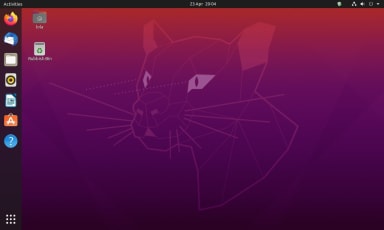
April 23rd 2020: Canonical, the publisher of Ubuntu, today announced the general availability of Ubuntu 20.04 LTS, with a particular emphasis on security and performance. “Accelerating open source globally is our mission. Ubuntu 20.04 LTS is the new state of the art open source platform for the enterprise and the entrepreneur,” said Mark

In December 2019, we asked you what you thought were the most important things for us to include in Ubuntu 20.04 LTS (now live!) 21,862 people took the survey, and have since become a part of our decision-making processes. We would like to thank each and everyone who spent their time to take this survey,
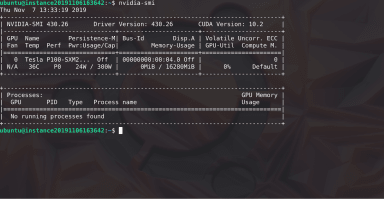
In recent reports, it is stated that datacenter-based GPU deployments is the fastest sector, and again, that’s no surprise. The cloud has had its own incredible growth over the years, and it’s only natural that these two technologies are starting to work in harmony. As a matter of fact, most public clouds have GPU offerings,

Newsletter signup

Discover Canonical’s proven OpenStack implementation process OpenStack is one of the most active open source projects in the world. It is an essential component of private cloud infrastructure for countless businesses, and over the last few years, it has evolved to become the de-facto standard for implementing cloud computing platforms. Y
Creating a new release of Ubuntu is always a complex undertaking. At Canonical, delivering Ubuntu is our core mission, and each new version represents the culmination of months of effort from colleagues throughout our organisation – not to mention the contributions from our wider, open source community. And as our Bionic Beavers and Trust

Earlier this year, Canonical had the pleasure of hosting WSLConf, a virtual conference dedicated to the Windows Subsystem for Linux (WSL). We demonstrated what teamwork and community can achieve when we flipped the in-person conference to a virtual experience in less than a week. WSLConf united developers, security professionals, team lea

When we launched Ubuntu back in 2004, our mission to make well-supported, free open source software available to everyone, everywhere was a bold one – but today, Ubuntu is one of the world’s most popular operating systems. One consequence of that popularity is that Ubuntu has very much entered the public consciousness, and its influence

The factors for implementing Kubernetes successfully at the edge Cloud native software such as containers and Kubernetes and IoT/edge are playing a prominent role in the digital transformation of enterprise organisations. They are particularly critical to DevOps teams that are focused on faster software releases and more efficient IT oper

We constantly strive to empower developers. Part of that aim extends to making development easier, for example improving build tools and documentation. As an element of this continued effort, we would like to introduce the new gnome-3-34 snapcraft extension! What is the GNOME snapcraft extension? The gnome-3-34 snapcraft extension is a co
This article was updated in September 2021 to reflect the new Ubuntu lifecycle. Come April 23rd 2020, Ubuntu 20.04 LTS will be available. It will be the first LTS version of Ubuntu since the 18.04 release, and in this blog, I want to answer the common question, what is an LTS? For a deeper look
The linux-aws 4.15 based kernel, which is the default kernel in the Ubuntu 18.04 LTS AMIs, is moving to a rolling kernel model. Why is this changing? The Ubuntu rolling kernel model provides the latest upstream bug fixes and performance improvements around task scheduling, I/O scheduling, networking, hypervisor guests and containers to ou
Ubuntu tech blog
Deep dives for developers
Visit the Ubuntu Tech Blog for deep dives into product features, step-by-step tutorials, and the latest updates from Canonical's engineering teams.